Promoting the Library in Term 2

Sadly, due to my injury and extended recovery I’ve been off for the vast majority of Term 2. The good news is that we live in a connected world, so I’m still able to promote our library and ensure access to its resources through our virtual library and social media platforms!

We’ve recently moved to a different online format for our school’s newsletter. Having the ability to take advantage of the different website features is a game-changer for promoting the library and allows me to be more visual with my content. This term I took the advice of a webinar I attended earlier this year and showcased the reading achievements of our students, giving shout-outs to the hard-working kids who have already completed the Premier’s Reading Challenge and to our top borrowers. I also chose to highlight the books which are currently trending in our library:

The wonderful thing about these presentations is that they are reusable: they can be embedded into the new website format for parents, and I can display them on the library TV during breaks, reading lessons, and meetings to promote the resources to our students and staff throughout next term. Two birds, one presentation!

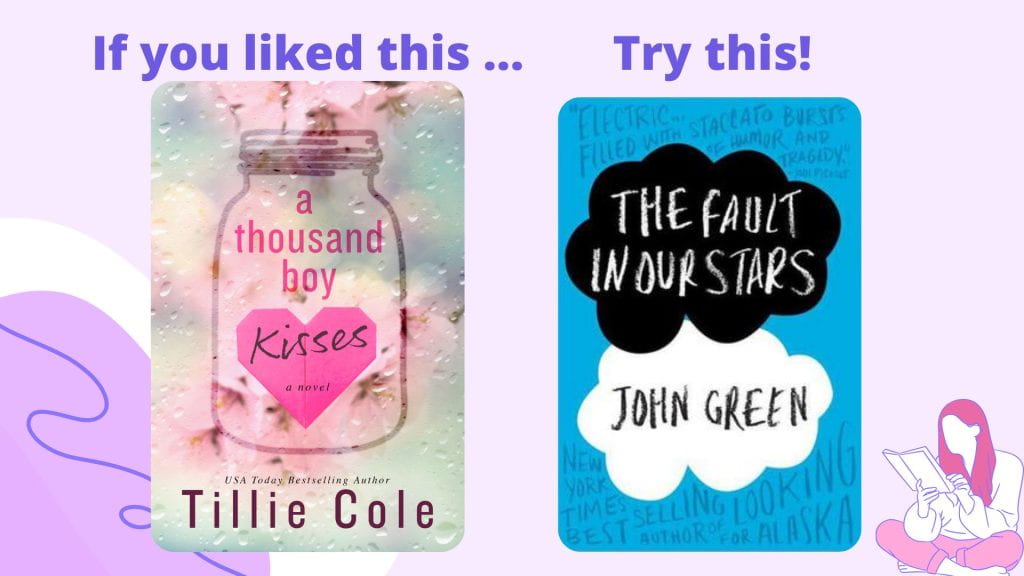
Since the library has been closed for an extended period, it’s been crucially important to maintain access to our virtual resources where possible. I therefore also created a visual resource to promote our ebooks and audiobooks to our community over the school holidays via our Instagram and Facebook pages:

Hopefully visually showcasing these titles will spark conversations amongst our students, staff, and parents, help normalise reading as a leisure activity, and remind my community that reading can be a social activity.

It’s been a long, disrupted term but it’s finally at an end. To my fellow NSW teachers, happy holidays! Rest up, recharge, and relax!

ETL402 2A: Introduction to Children’s Literature

As an English teacher, I am already quite familiar with children’s literature and the benefits of reading for pleasure. Nonetheless, it has been interesting starting this subject to consider recent research and trends in this area.

One thing mentioned in the research that I can definitely back up with anecdotal observation is the trend for interest in reading for pleasure to drop off between the ages of 9-12. The research mentioned that this could be because of competing demands on children’s time as they get older and a growing sense that reading for pleasure isn’t valued as a leisure activity, especially in contrast with competing entertainment platforms such as the internet and gaming. I also think that for many students their identity as ‘non-readers’ and the perception that reading is something ‘nerdy’ only done by a specific type of person has been established by the time they hit high school. This issue seems to be compounded by the limited amount of books relevant to struggling teen readers (especially boys!). If a student has a lower reading ability in high school they are often limited to texts where the content (characters, events, themes) is more relevant for a younger audience; it would be nice if publishers recognised the need for age-appropriate content and cover designs on easy-to-read books. This is perhaps one area where the flexibility of ebooks and audiobooks could be highlighted by school librarians as a potential solution for students who perceive themselves as ‘struggling readers’.

Also supported by my own observations are the statements in the research about the continued popularity of series fiction. The students who regularly borrow from our school library are often borrowing texts from the same authors or series, which shows that once you hook a reader with a specific set of characters or world they are more likely to continue to engage due to the comfort of familiarity. Many of our manga series such as My Hero Academia,  Death Note, Fullmetal Alchemist, and Fairy Tale are incredibly popular and many of the students read them as a friendship group, which increases their cultural capital within that group. Teacher librarians could capitalise on this by promoting Book Clubs where students and staff read from a curated book list and discuss their experiences of reading these texts. These book clubs can also serve the purpose of reframing student perceptions about who counts as a ‘reader’. Series fiction is also incredibly popular, with titles such as the Wings of Fire and Arc of the Scythe series providing students a chance to engage with an imagined world over the course of several books. Teacher librarians can capitalise on the popularity of these texts by promoting fan-fic activities and through displays recommending their next reads based on their previous favourites.

It can be hard to keep up with trends in children’s literature. One strategy that teacher librarians can utilise is to follow websites and blogs such as Goodreads and Booktopia. Another is to use technology and social media platforms as a way of tracking popular resources, such as the #booktok or #bookstagram tags. A third is to regularly visit bookstores and local libraries (either the physical location or their online space) to see which books are popular right now and engage with the people selling and promoting these resources in a different setting. Most important is the need for teacher librarians to carve out time for their own reading of these texts. Not only will this allow us to engage in meaningful conversations with our students about these texts (increasing our own cultural capital i.e. ‘cool’ factor with certain groups of students!) but it will also allow us to show that reading for pleasure is a valuable activity that should be likewise valued by our school community. It’s hard for us to advocate for the importance of reading for pleasure if we aren’t taking the time to walk the walk (or read the read, as the case may be).