
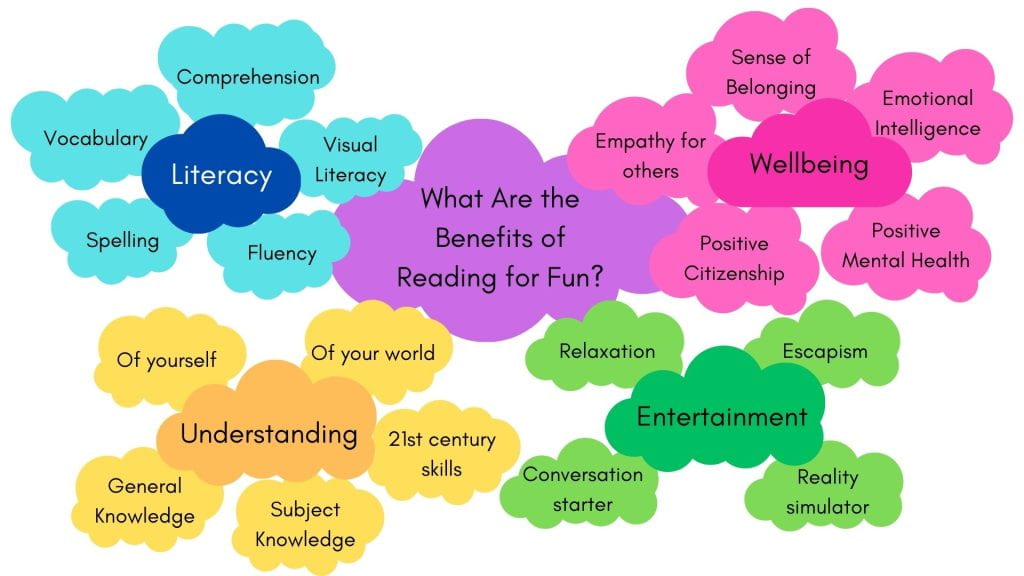
Last week the Wide Reading Program started back up for 2024. I had three classes (two year 8, one year 7) come into the library for their first lesson, where we explored the reasons why we are running the program and what the research says about the benefits of reading for pleasure:
During this lesson I ask students to fill out a survey to give me information about their perceived reading ability, their identity as readers, and their reading preferences. Here’s the results from the three classes I’ve seen so far.

There’s no real surprises here; short books, books with images, and books with connections to other media such as movies or TV shows are usually the top picks for my students. Series books are also identified as a popular choice, supporting the academic research in this space. While manga is generally the most popular genre in my library each year, many students aren’t actually aware of what it is, suggesting that dedicated lessons on manga and how to read it would be beneficial.

Their responses for the reader identity question also supports the research I’ve mentioned previously around teen reading habits, which suggests that by the time they reach high school they are increasingly ambivalent to the idea of reading as a leisure activity.
In this survey I ask students to tell me about the last book they’ve read as well as their favourite book. I also ask them to set themselves a reading goal for the year, and plan in a future lesson to get them to reflect on these goals while designing personalised bookmarks to help keep them on track.
This is only my third year running this program (and my first since graduating from the teacher-librarianship Master degree). There’s no formal curriculum to work with and the high staff turnover alongside constant interruptions in the library space have previously made it difficult to assess the program’s efficacy. Fingers crossed that this year I’ll be able to run it more consistently and I’ll be able to gather useful data to inform the program’s future activities.